BRIEF ABOUT ENVIRONMENTAL CONVENTIONS :-

1. Ramsar Convention :-
• It is called the Convention on Wetlands.
• It was adopted in the city of Iran, Ramsar in 1971.
• It came into force in 1975.

2. Stockholm Convention :-
• It is a convention on Persistent Organic Pollutants (POPs)
• It was adopted in 2001 in Geneva, Switzerland.
• It came into force in 2004.
* The Stockholm Convention on Persistent Organic Pollutants (POPs) is a global treaty to protect human health and the environment from POPs by restricting and/or eliminating their production, use, trade, release and/or storage. POPs are chemicals characterized by following properties: persistent, bioaccumulative, toxic, and travel long distances through the environment.
The POPs Review Committee (POPRC) is a subsidiary body to the Convention mandated to review chemicals proposed for inclusion in Annexes A, B and/or C to the Convention. The Committee evaluates whether the proposed chemical satisfies the POPs criteria and makes recommendations to the Conference of the Parties (COP) to consider its listing in Annexes A, B and/or C to the Convention.
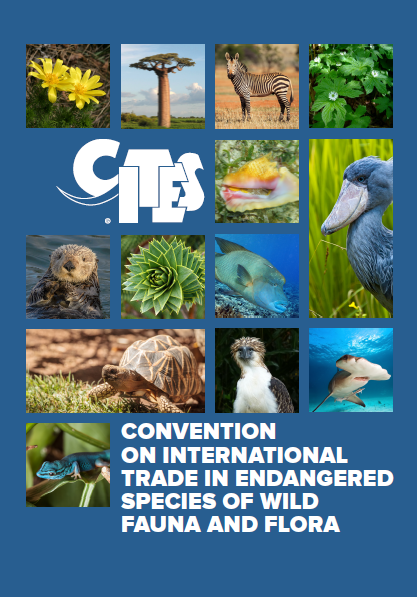
3. CITES :-
• It is a Convention on International Trade in Endangered Species of Wild Fauna and Flora.
• It was adopted in 1963.
• It came into force in 1975.
• Geneva, Switzerland
(To ensure that international trade in specimens of wild animals and plants does not threaten the survival of the species.)

4. Convention on Biological Diversity (CBD) :-
• It is a convention for the conservation of biological diversity.
• It was adopted in 1992
• It came into force in 1993.

5. Bonn Convention :-
• It is a convention on the Conservation of Migratory Species of Wild Animals.
• It was adopted in 1979.
• It came into force in 1983.

6. Vienna Convention :-
• It is a convention for the Protection of Ozone Layer.
• It was adopted in 1985.
• It came into force in 1988.

7. Montreal Protocol :-
• It is an international environment protocol on substances that deplete the Ozone Layer.
• It was adopted in 1987.
• It came into force in 1989.

8. Kyoto Protocol :-
• It is an international protocol to reduce greenhouse gas emissions.
• It was adopted in 1997.
• It came into force in 2005.

9. United Nations Framework Convention on Climate Change :-
• It is an international environmental treaty governing actions to combat climate change through adaptation and mitigation efforts directed at control of emission of GreenHouse Gases (GHGs) that cause global warming.
• It was adopted in 1992.
• It came into force in 1994.

10. Rio Summit :-
• It is a United Nations Conference on Environment and Development.
• It was held in 1992 at Rio de Janeiro, Brazil.


11. UNCCD :-
• It is a United Nations Convention to Combat Desertification.
• It was adopted in 1994.
• It came into force in 1996.

12. Basel Convention :-
• It is a convention on the Control of Trans Boundary Movements of Hazardous Wastes and their Disposal.
• It was adopted in 1989.
• It came into force in 1992.

13. Cartagena Protocol :-
• It is an international environmental protocol on Biosafety to the Convention on Biological Diversity.
• It was adopted in 2000.
• It came into force in 2003.
14. UN-REDD :-
• It is a United Nations Programme on Reducing Emissions from Deforestation and Forest Degradation.
• It was created in 2008.
15. Nagoya Protocol :-
• It is an international environment protocol on Access to Genetic Resources and the Fair and Equitable Sharing of Benefits Arising from their Utilization (ABS) to the Convention on Biological Diversity (CBD).
• It was adopted in 2010.
• It came into force in 2014.
16. COP24 :-
• It is the 24th meeting of the conference of parties (COP) to the United Nations Framework Convention on Climate Change.
• It took place in 2018.
17. COP21 :-
• It is the 21st meeting of the conference of parties (COP) to the United Nations Framework Convention on Climate Change.
• It took place in 2018.
18. Kigali Agreement :-
• It is an amendment to the Montreal Protocol.
• It was adopted in 2016.
• It came into force in 2019.
19. Minamata Convention :-
•It is an international environmental treaty intended to protect health and the environment from the adverse effects of mercury.
• It was adopted in 2013.
• It came into force in 2017.
20. Rotterdam Convention :-
• It is an international environmental convention on Prior Informed Consent (PIC) Procedure for Certain Hazardous Chemicals and Pesticides in International Trade.
• It was adopted in 1998.
• It came into force in 2004.
21. COP25 :-
• It is the 25th meeting of the Conference of Parties (COP) to the United Nations Framework Convention on Climate Change (UNFCCC).
• It took place in 2019.
Comments
Post a Comment